By Jim Ireland
Evergreen trees are plants that retain foliage (leaves) year-round, staying green across all seasons, including winter or the dry season. This feature contrasts them with deciduous trees, which shed all their leaves annually.
The defining feature of evergreens is their ability to continuously retain green and functional leaves. They don’t lose all their leaves at once; instead, they shed them slowly and gradually as new ones grow.
Foliage
Evergreen leaves are often thick, leathery, and covered in a waxy coating (cuticle). This structure, especially the waxy coating, helps the trees conserve water and survive in harsh conditions like cold winters or dry, nutrient-poor soils.
Leaf Types: Evergreens are broadly categorized into two main types based on their foliage:
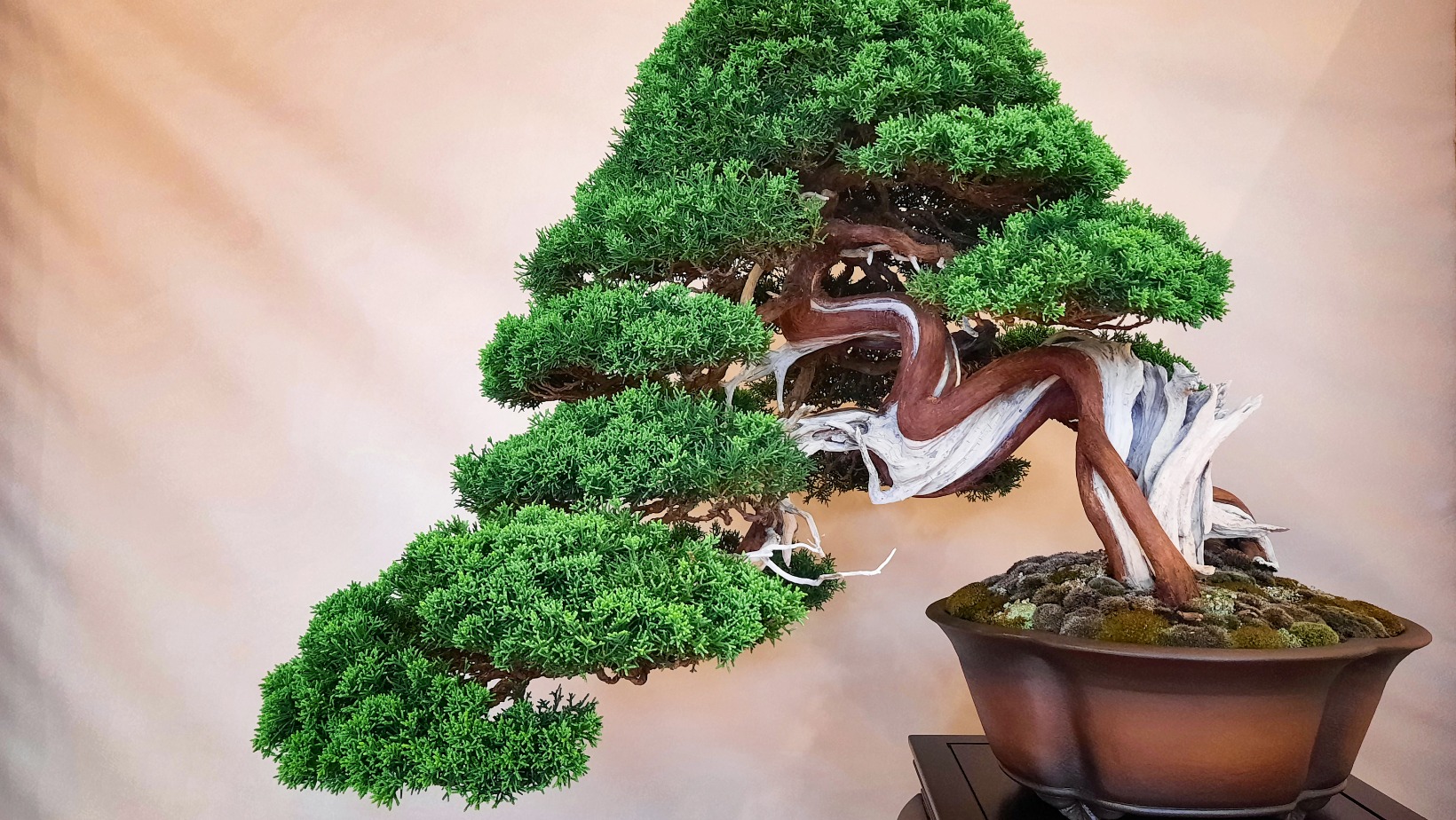
Needle-leaf Evergreens (Conifers): These are the most common evergreens in temperate and arctic regions. Their leaves are typically needle-like (like Pines, Firs, Spruces) or scale-like (like Junipers, Arborvitae). Most conifers produce seeds in cones.
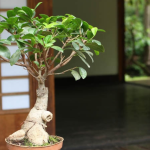
Broadleaf Evergreens: These have flatter, broader leaves, similar to deciduous trees. Examples include Hollies, Magnolias, Ficus, and most trees found in tropical rainforests.
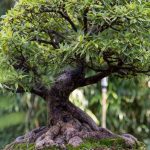
A great choice for bonsai, Evergreens offer year-round beauty. Care can vary slightly depending on the specific species, but here are the general care guidelines:
Watering
• Frequency: Evergreen bonsai need regular watering, but the frequency depends on the season, climate, and the specific type of evergreen.
• Rule of Thumb: Water thoroughly when the topsoil feels slightly dry to the touch. Never let the soil become bone-dry.
• Summer/Warm Months: You may need to water daily or even twice a day due to increased evaporation.
• Winter/Dormancy: Reduce watering frequency significantly, perhaps to once a week or less, but the soil should never dry out completely.
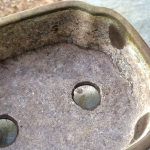
• Method: Water from the top until water runs freely out of the drainage holes. This ensures the entire root ball is saturated.
Light and Placement
• Sunlight: Most evergreen bonsai, especially conifers like Pines and Junipers, prefer full sun (about 5-6 hours of direct sunlight daily).
• Outdoor vs. Indoor: The majority of common evergreen bonsai (Pines, Junipers, Spruces) are hardy, outdoor plants that require a period of cold dormancy in the winter to survive long-term.
• Winter Protection: In colder climates, hardy evergreens should be protected from the harshest freezing temperatures, but they still need to stay outdoors or in an unheated area to go dormant.
• Tropical Evergreens: Some evergreens, like certain Ficus or others, are tropical and should be kept indoors year-round, or brought in before temperatures drop.
Soil and Repotting
• Soil: Use a specialized bonsai soil or cactus mix that offers excellent drainage while still retaining some moisture. Fast-draining soil is crucial to prevent root rot.
• Repotting: Repotting is generally done every 2 to 3 years in the spring or summer, or when the tree is root-bound.
• Process: During repotting, you will gently remove the tree, prune a portion of the long, thick roots, and replace the old soil with fresh bonsai mix.
Pruning and Shaping
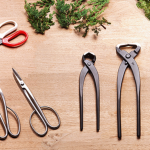
• Maintenance Pruning: Regularly remove dead or yellowing foliage and thin out congested areas to allow light and air to reach the inner branches.
• For needle evergreens (like Pine), use sharp scissors or gently pinch out new growth that is too large or sticking out of the desired silhouette.
• Wiring: Branches can be wired to shape the tree. It’s often recommended to wire evergreens (especially conifers) when they are vigorous and you can read the tree’s health easily. Wiring can sometimes be done in the fall before or early in dormancy.
• Warning: Be very careful when pruning or shaping evergreens, as new growth (budding back) can be slower or non-existent on old wood compared to deciduous trees.
Feeding (Fertilizing)
• Growing Season: Fertilize regularly during the spring and early summer when the tree is actively growing. A balanced fertilizer (e.g., a 10-10-10 NPK ratio) is often recommended.
• Dormancy: Reduce or stop fertilizing in the fall and winter.
• Caution: Always water your bonsai before fertilizing, and never fertilize a weak, sick, or freshly repotted tree.