By Mark Wallerich
Bonsai tools are designed for styling and maintaining bonsai, though not all tools need to be specialized. The best tools come from select manufactures in Japan with several good manufacturers also based in USA, Europe, and China. With proper maintenance and care, your bonsai tools can last several years.
Depending upon the manufacturing processes of handmade vs. machine made, forging, material costs, import/export duties, etc., bonsai tools can be very expensive. Most all bonsai tools have some form of machine and hand-made manufacturing. Fortunately, there are relatively inexpensive tools available in the market. Though better tools give you better results with less damage to the tree.
Bonsai Tool Metallurgy
The best steel (stainless or otherwise) comes from the United States, England, Germany, Switzerland, Sweden, and Brazil. Several Japanese manufacturers also use excellent grades of steel and stainless steel that are variations of either a martensitic stainless steel (heat-treatable) or a good quality high carbon steel (also heat-treatable) and most are based upon the traditional Japanese steels.
Stainless Steel: Almost all stainless steels used in bonsai tools are heat-treatable due to the presence of 0.4% to 1.2% carbon in the material (martensitic stainless steel). The higher the carbon content, the harder you can heat-treat the steel. Hardness can range from 50 HRC (Hardness Rockwell C scale) to 62 HRC or higher in the more expensive tools.
Because these stainless steels have carbon in them, they are not completely stainless. But they do much better with adverse conditions than just high carbon steels. Stainless steel tools are better for use on trees that have acidic sap like Portulacaria afra, or many other succulents and Ficus trees. These stainless steels are magnetic and are usually more expensive (material cost) than carbon steel.
Basic 18-8 stainless steel (18% Chrome, 8% Nickel) has almost no carbon, is non-magnetic, and is work hardenable (austenitic stainless steels). This stainless steel cannot be heat-treated but is almost completely stainless in any condition. By working and stretching the material (also called work hardening) it can get harder (think of a stainless steel kitchen sink), but cannot be hardened as much as martensitic stainless steel.
Carbon Steel: All carbon steels used is heat-treatable due to the presence of 0.4% up to 1.45% carbon in the material. There are some layered scissors that use iron for the body and blade backing, and use a layered high carbon steel for the cutting edge (similar to Japanese Katana swords). Hardness’ can range from 55 to 65 HRC. If you get much harder than this, the material becomes brittle and can break or crack.
For most purposes, carbon steel tools are preferred over stainless steel tools, because they can maintain their sharpness better and longer.
Forging: Most bonsai tools are hot forge-formed (such as scissors and cutters) either by hand or machine. Stretching or pounding the steel like this makes the material grain structure long and thin to improve strength and durability like the way bamboo naturally grows.
Traditional Japanese Steels: Known as Yasugi steel, these traditional Japanese steels have been produced in Sanjo, Japan since ancient times. They are yellow, white and blue based upon the colored paper used for identification.
Yellow steel is generally a medium-to-high carbon steel with some minor impurities. White steel is a high carbon steel with the impurities removed. Blue steel (highest grade) is made from white steel, but has added chrome, tungsten and sometimes molybdenum or vanadium added for additional strength and durability.
Over the recent decades, more versions of the Yasuki yellow, white and blue steels have been added as well as a variety of stainless steels.
Bonsai Tool Selection
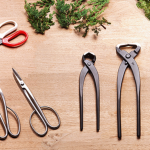
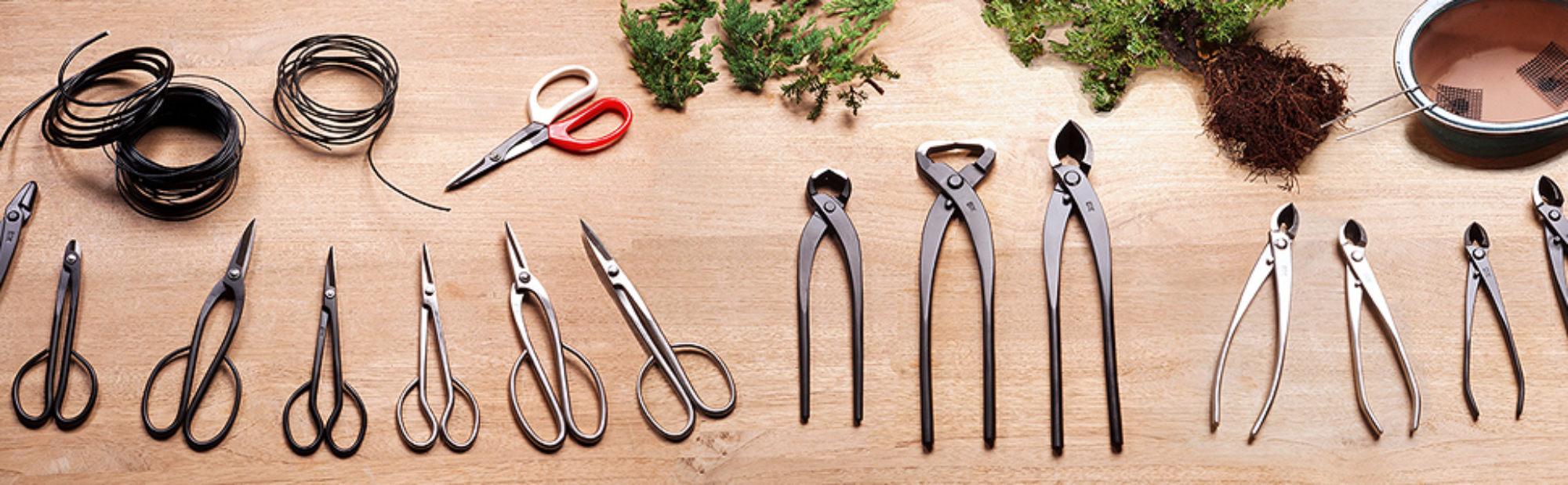
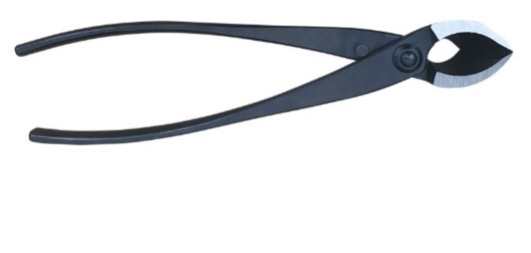
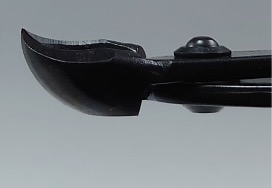
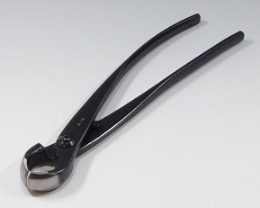
Primary Tools: The main primary tools are cutting (ex. scissors, concave cutters, pruning shears, and saw). There are three main types of scissors (traditional butterfly, general trimming and bud scissors) and two main types of concave cutters (straight concave and spherical concave). Scissors and concave cutters are available with different handles and blade configurations – all are useful with some better suited for specific tasks.
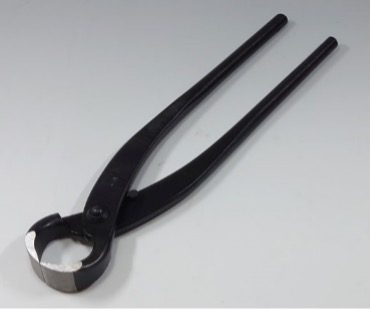
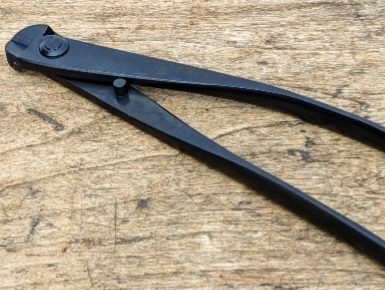
Secondary Tools: The main secondary tools are for shaping (ex. wire cutters and wire pliers). Additional tools include the spherical knob cutter, spherical concave cutter, root cutters, trunk splitters, Jin pliers, chop sticks, rooting hook, carving tools, etc.
Root Cutting and Potting Tools: In effort to keep tools in good condition, you should have a separate, cheaper set of tools for root pruning and repotting. Trimming roots and soil is extremely hard on tools and can damage them. Butterfly scissors and pruning shears are the most useful.
Note: Some bonsai tools are difficult, if not impossible, to replace. Scissors must have a short blade length so they do not warp while cutting. Bonsai wire cutters are specifically made to cut the wire off the limbs without damaging the bark. Bonsai concave cutters are specifically made to cut close to the trunk. If it is of good quality, works, and is sharp, other types of tools can be used.
Tools like electrical wire cutters, bent needle nose pliers, cuticle cutters and scissors, stout blade knives, hemostats, hobby carving tools, pruning shears, etc. can all be used very effectively.
Main Bonsai Tools
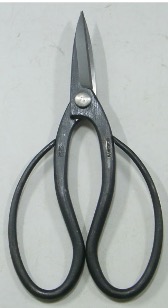
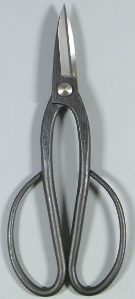
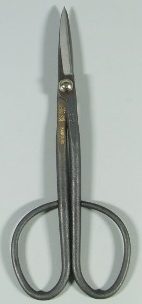
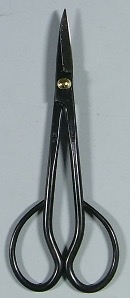
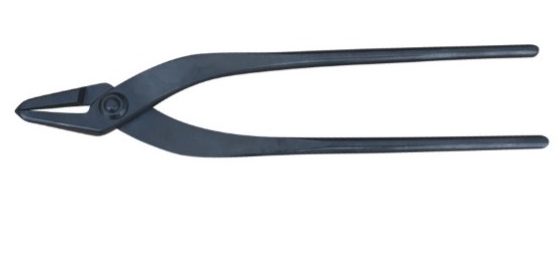
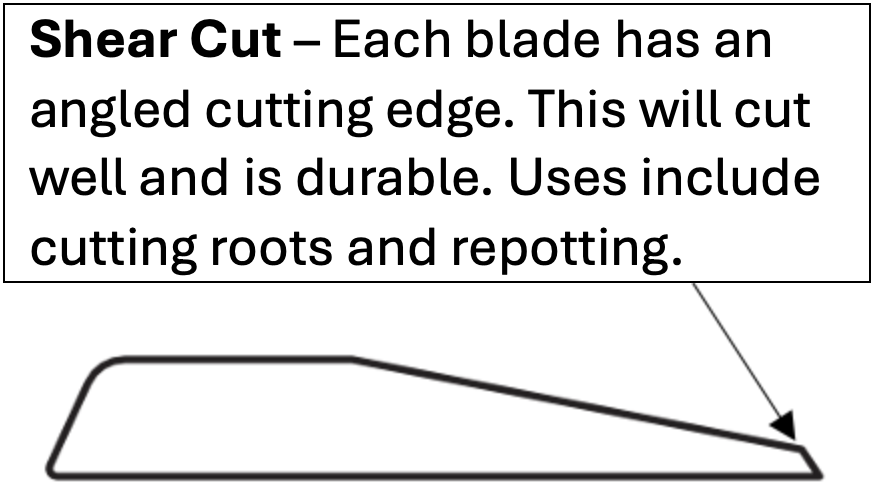
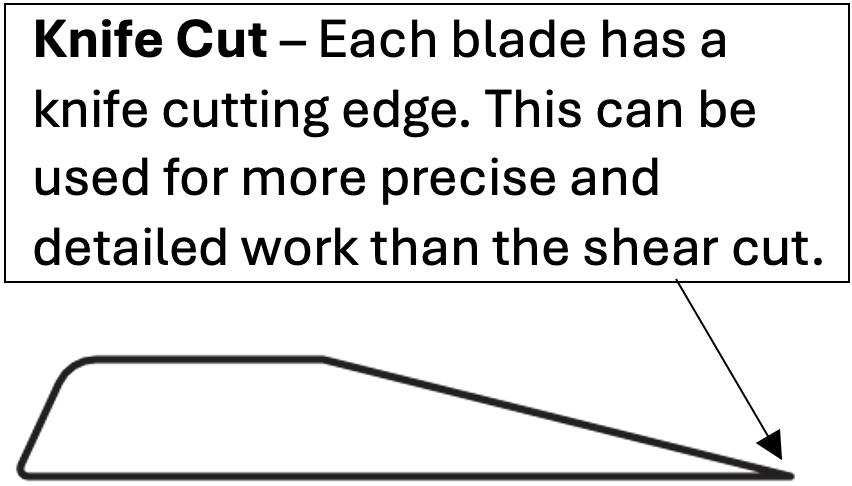
Scissor Cut Profiles – Shear cut and knife cut
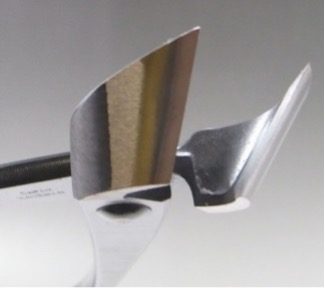
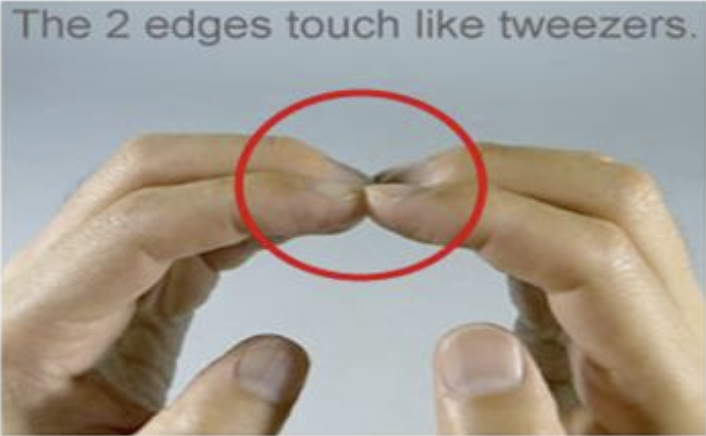
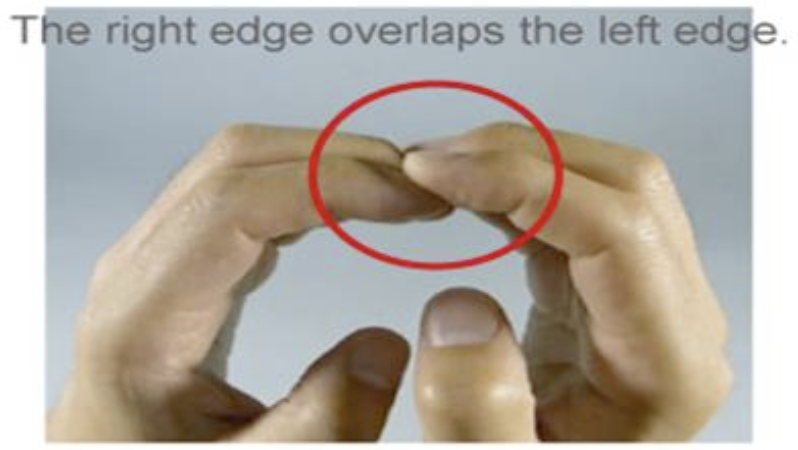
Cutter Profile for All Cutters, Except Scissors – The cutter edges should not touch as shown. They should overlap to prevent premature dulling of the edges.
Cleaning and Sharpening Bonsai Tools
Cleaning Tools: Use alcohol, WD40, or various automotive petroleum base cleaners for general cleaning and disinfecting. If using WD40, make sure to clean off the WD40 before using the tool so trees are not damaged. ALWAYS clean your tools between trees to prevent disease transfer. Clean, smooth tools also make cuts easier due to less friction.
You can use an abrasive eraser to clean off tree sap and corrosion from the cutting surfaces. An abrasive eraser is basically an abradive rubber loaded with very fine sand. There are a few products available for doing this, like specific bonsai tool cleaning blocks (Crean Mate), ones for mechanics tools (i.e. – Sandflex Abrasive Block or something like it), school block ink erasers, and even a pencil like stick ink eraser.
Lubricating And Preserving Tools: For lubricating the pivot joint, use a medium viscosity petroleum base oil (like a 20-weight engine oil; oils reinforced with Teflon powder, mineral oil, etc.). WD40 and Starrett M1 Lube are too thin for lubricating a pivot joint, but they can be used as a cleaner and a preservative for the tools. For preserving tools, use a plant-based oil like Camellia oil, which is less likely to go rancid compared to other plant-based oils such as olive oil, corn oil, etc. All preservative oils should be left to set for a minute or so, then wiped off to form a very thin preservative finish. Most preservatives are not good for plants except plant-based oils. Note that Camellia oil when dry, leaves the surface sticky.
Sharpening Bonsai Tools: Sharpening sticks and wands (flat and round), sharpening stones, dremel tools, and grinders are often used to sharpen bonsai tools. If the steel is hard enough, steel files will not work, so only use ceramic, natural stone or diamond in 400 to 1200 grit sizes. Grit sizes smaller than 1200 (2000 – 5000 grit) are for fine honing/polishing and are used mostly for the finest kitchen knives.
When you sharpen your bonsai tools, you begin to recognize how hard or soft the steel is by how easy or hard it is to put an edge on the tool. Sharpening takes some practice and every tool is different, requiring a different technique, sharpening stone, or grit size. Remember that bonsai tools don’t need to be razor sharp (like Japanese kitchen knives). Focus on developing a good working edge that will ultimately last longer.
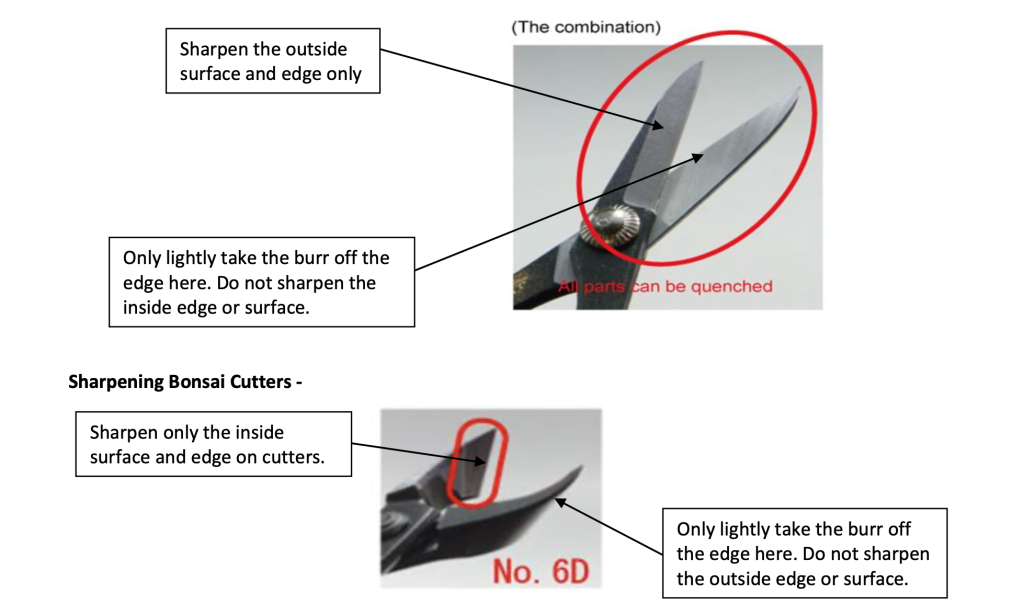
Edges to Sharpen: For scissors and shears, only sharpen the OUTSIDE of the blades at a 0°-to-5° angle. Do not sharpen the inside of the blade. Only run a stone flat across the inside surface to take the sharpening burr off.
For cutters (concave cutters, knob cutters, root cutters, etc.), it’s normal to only sharpen the inside of the blades. On the outside, simply run a stone flat across the surface to take the sharpening burr off. Depending upon what needs to be done, sharpening from the outside can also be done in some circumstances. If you’re industrious, grinding and smoothing the inside of the blades makes cutting branches and wood easer due to less friction.
Sharpening Scissors and Shears:
Bonsai Tool Manufacturers
The following list includes a small number of bonsai tool manufacturers. Most of the different tool brands are in Japan, but there are good manufactures in America, China and Europe as well.
Sasuke (pronounced Sass-Kay) (Japan): Hirakawa Yasuhiro is a 22nd generation master Japanese blacksmith making scissors and knives. Several of the scissors he makes are for bonsai. His great-great grandfather in Sakai, Japan started making scissors in the 1860’s. Everything is handmade with layered Japanese steels. It can take 4 days to a month or more to make a pair of scissors. The waiting list can be more than a year for a pair of scissors. All his products are very expensive, but are lifetime tools.
Masakuni (Japan): Masakuni is the original Japanese designer and manufacturer of specific bonsai tools, starting more than a 100 years ago. They make some of the best bonsai tools available with excellent fit, finish, and durability for both their carbon steel and stainless steel tools. Masakuni’s levels of tools include the Standard grade, the Professional grade, and the specially made and Made-to-Order Handmade tools which are higher quality and higher priced.
Kaneshin (Japan): They started making the bonsai tools about 70 or more years ago. Kaneshin’s best scissors are layered Japanese white steel or blue steel. All their tools have excellent fit, finish, and durability and rival Masakuni’s tools. Primarily they use high carbon tool steel, and layered Yasuki yellow, white and blue steel, and some stainless steels for making their variety of tools.
American Bonsai (USA): Based in Florida, American Bonsai started making bonsai tools in 2013. All tools have excellent fit, finish, and durability, and are some of the better tools made. They use several different compositions and grades of US stainless steels for their tools and are heat treated appropriately for the best durability. Each tool carries a lifetime warranty for the original owner.
Joshua Roth (Japan): Crafting excellent tools since 1980. Joshua Roth sells tools only through their dealers. These tools are well-made with a great finish and durability. Some of their tool cutter profiles and shapes might be better for some bonsai artists. Made in Japan, there are four grades of Joshua Roth brand of tools from novice to master. Joshua Roth also owns the Ryuga China brand.
Senkichi Gold Bonsai Tools (Japan): The gold line of Senkichi Bonsai Tools are very good. They have adjustable pivots and use Japanese #2 white steel (layered) for the cutting edge. Not much other information is available for this brand.
Kikuwa (Japan): Kikuwa has been in business for over 60 years. They are like a co-op, in that many Japanese craftsman, artisans, and manufacturers make their brand of tools, along with manufacturing tools for many other companies. Excellently made tools with a great fit, finish, and durability, several of their scissors have Aogami (blue steel, layered) steel.
Wazakura (Japan): Wazakura has been making Japanese bonsai and Ikebana tools since 2019. Headed by long time master craftsman and designers. Very well-made tools by local Japanese workshops. Many of their tools have different style ergonomic handles that other brands do not have.
Tian-Bonsai (China): These are some of the best bonsai tools made in China. They opened worldwide stores in 2013. All tools are forged and heat-treated stainless steel. They have 4 levels of tools. Master Grade and Master Craftsman Grade are only scissors. Each level is a different stainless steel with higher levels of carbon and hardness. Their professional grade tools are heat treated to >55 HRC and seem to be the best value for the price of any bonsai tools.
Vouiu (China): These are well-made Chinese bonsai tools and good choice for the beginner bonsai artist. Vouiu tools are made by a company that makes hand tools and implements (hand-operated), jewelry tools, cutlery, side arms, and razors. They have been making bonsai tools since 2016.
For pruning shears the best brands are Felco (Swiss), Corona (US), Masakuni (Japan), KT (rare Japan), ARS (Japan), and some Fiskars. Look for a wire cutting notch at the base of the blade for an added feature.
Where should I put my money in obtaining tools?
If you’re just getting into bonsai, it’s recommended to begin with cheaper basic tools. As you progress, use your cheap tools for cutting roots and get better tools for daily use. Note that most of the bonsai tools can be expensive, so be selective.
If you’re already practicing bonsai and investing more time in it, buy the best tools you can afford that you will use the most. For example, bud shears, general trimming shears, and either a concave cutter or a spherical concave cutter.
Better tools always give better results as they allow cleaner cuts and do less damage to trees.
There are many other well-made Japanese brands available that are aware of Masakuni’s reputation and are trying to be competitive with them.
Many other tools made in China are considered beginner tools. It’s not recommended to buy a lot of the Chinese tools online as the quality can be hit-or-miss due to low-quality checks. For example, pivots are too tight or loose, low-quality high carbon steel, improperly heat-treated, bad finishes, dull cutting edges, etc.
So far, experience with Masakuni, Kaneshin, Joshua Roth, Fujiyama, Masaaki, American Bonsai, Kiku and Senkichi gold bonsai tools shows excellent results. Masaaki and Kiku may not be in business anymore. Tian-Bonsai tools from China and Wazakura tools from Japan have also been shown to be very good tools.
Starrett M1 Lube is the best preservative for carbon steel tools. In general, stainless steel tools do not need a preservative.
NOTE: specific data about the exact metal alloys, manufacturing processes and heat treatments are not detailed with any of the manufacturers. They are often trade secrets. Some of the details noted above are extracted due to physical metallurgical properties known for working with high carbon steels, martensitic stainless steels, and the manufacturing processes necessary to produce the tools.
References
- Various manufacturer’s websites for Masakuni, Kaneshin, Joshua Roth, American Bonsai, Tian-Bonsai, Kikuwa, Wazakura, Vouiu bonsai tools and suppliers of bonsai tools.
- Book – Introduction to Physical Metallurgy by Avner
- Book – Metals Handbook Series, 8th edition
- Book – Materials Selector Book by Materials Engineering
- Book – Corrosion and Corrosion Control by Uhlig.
- Select Youtube video’s about bonsai tools (some good, some bad) and some demonstration videos.
- Leroy’s Care Schedule on the Phoenix Bonsai Society website.
- Many years’ experience of sharpening knives, tools, bonsai tools and metal working.